
The Most Popular Iftar Dishes at MyLahore (And Why Everyone Loves Them)
Ramadan changes the rhythm of the day completely. The alarm goes off before dawn for Suhoor, the hours between are spent fasting, and everything builds towards Maghrib when the fast finally breaks. For British Pakistani families, the food that surrounds those two moments carries decades of memory, tradition, and meaning that goes well beyond the meal itself.
This is a guide to some of the most important traditional Pakistani Ramadan foods, what makes them significant, and how they appear on the menu at MyLahore across our restaurants in Leeds, Bradford, Manchester, Birmingham and Blackburn.
For context on the tradition and timing of iftar itself, our guide on what is iftar covers the occasion in full.
The Role of Food in Pakistani Ramadan Tradition
Food during Ramadan is not just sustenance. It is an expression of hospitality, faith, and cultural identity. In Pakistani households, the iftar spread is something that is prepared with care regardless of how long the day has been. Dishes are chosen for how they sit after a fast, for what they mean to the family eating them, and for the way they bring people to the same table at the same moment every evening.
That sense of occasion, of food as something tied to memory and community, is something MyLahore has been built around since the beginning. Our post on the blessing of eating together gets into the spirit of that more personally. The dishes below are the ones that show up on Pakistani tables every Ramadan, and the ones you will find done properly at MyLahore.
Traditional Iftar Foods and What Makes Them Matter
Iftar begins with dates and water, following the Sunnah of the Prophet Muhammad (peace be upon him). After that, the food moves quickly from light and sharp through to warming and substantial. Pakistani iftar spreads typically follow this logic without anyone needing to plan it consciously. It is just how the meal has always been assembled.
Samosa and Samosa Chaat
The samosa is probably the most iconic Pakistani iftar food in the UK. Crispy pastry filled with spiced mince or vegetables, deep fried and served hot. Simple in concept, very difficult to get exactly right.
At MyLahore, the Meat Samosa is filled with lightly spiced mutton mince, onions and potato. The Veg Samosa uses carrots, peas, mixed beans, sweetcorn, potato and onions. Both are available as chaat, which layers the samosa with chickpeas, potato, onions, cucumber, tomato, spicy yoghurt sauce, imli sauce and papri. The chaat version in particular is a dish that earns its reputation every time it lands on a table. Sharp, warm, textured, and exactly right as the first proper bite after a fast.
Pakora
Pakoras are the other constant at Pakistani iftar. Battered and fried pieces of vegetable, served hot with chutney and mint sauce, they are the kind of food that fills the gap between sitting down and the main course without anyone noticing how many they have eaten.
The Onion Pakora at MyLahore is onions, spinach and potato in a special spiced batter, deep fried until golden. Vegetarian, straightforward, and consistently one of the most ordered starters throughout Ramadan. The Fish Pakora is the other popular option, flaky cod pieces in a special spicy batter and deep fried, for anyone who wants something a little more substantial from the first course.
The Main Dishes of Pakistani Ramadan
After the fast is broken with lighter food, the main course is where the evening settles. These are the dishes that Pakistani families return to every Ramadan, dishes that carry history and flavour in equal measure.
Nihari
Nihari is one of the most culturally significant dishes in Pakistani cuisine. A slow cooked broth built around lamb shank, deeply spiced and left to develop over hours, it is traditionally associated with early morning eating after Fajr prayer. During Ramadan it has become firmly embedded in the iftar tradition too, particularly for families who want something that feels genuinely substantial after a long fast.
The Lamb Nihari at MyLahore is cooked as it should be: slow, patient, finished with ginger, coriander, fried onions and chillies, and served with lime. It is subject to availability and moves quickly when it is on. The broth alone is worth coming for.
Karahi
If nihari is the dish of patience, karahi is the dish of confidence. Cooked in a round iron wok at high heat, a proper karahi is all about direct flavour, no softening, no compromise. Onions, tomatoes, green chillies, whole spices, finished with fresh coriander and ginger.
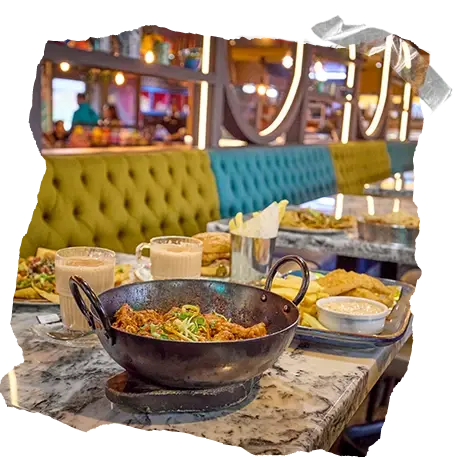
The Lahori Chicken Karahi at MyLahore uses chicken thigh, which holds up to the heat and absorbs the spice blend properly in a way that breast meat simply does not. It is finished with a touch of cream, which rounds out the edge without blunting any of the character. Order it with fresh naan and take your time. For a broader look at the most popular dishes during Ramadan at MyLahore, our post on the most popular iftar dishes at MyLahore goes into more detail.
Biryani
Biryani occupies a particular place in Pakistani food culture. It is celebratory food, the kind of dish that signals a special occasion, and Ramadan qualifies entirely. Fragrant basmati rice, whole spices, slow cooked meat, and the kind of aroma that travels well ahead of the dish itself.
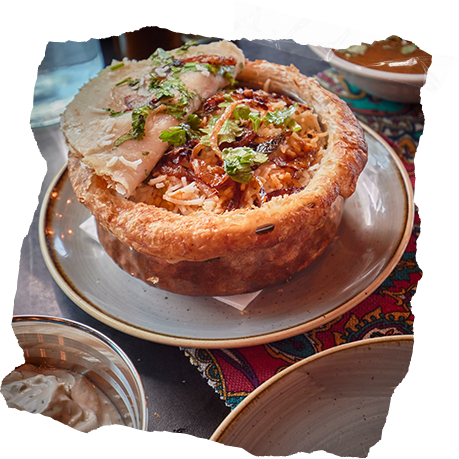
At MyLahore, the Dum Biryani is seasoned basmati rice with potatoes and the MyLahore biryani spice blend, baked under a golden bread crust and served with raita or curry sauce. The baked crust is not decorative. It seals the steam inside during cooking and the rice underneath is better for it.
Traditional Ramadan Desserts in Pakistani Culture
The sweet course after iftar is as important as anything that comes before it. Pakistani Ramadan desserts tend towards the traditional: slow cooked, cardamom-scented, and built for sharing.
Falooda
Falooda is rose syrup, milk, basil seeds, vermicelli noodles and kulfi ice cream in a single glass. It is cooling, floral, and deeply familiar to anyone who grew up with it. The basil seeds add texture, the kulfi brings richness, and the rose syrup ties everything together. It is a dessert that works particularly well after a heavy iftar meal because it refreshes rather than compounds.
Gajrela
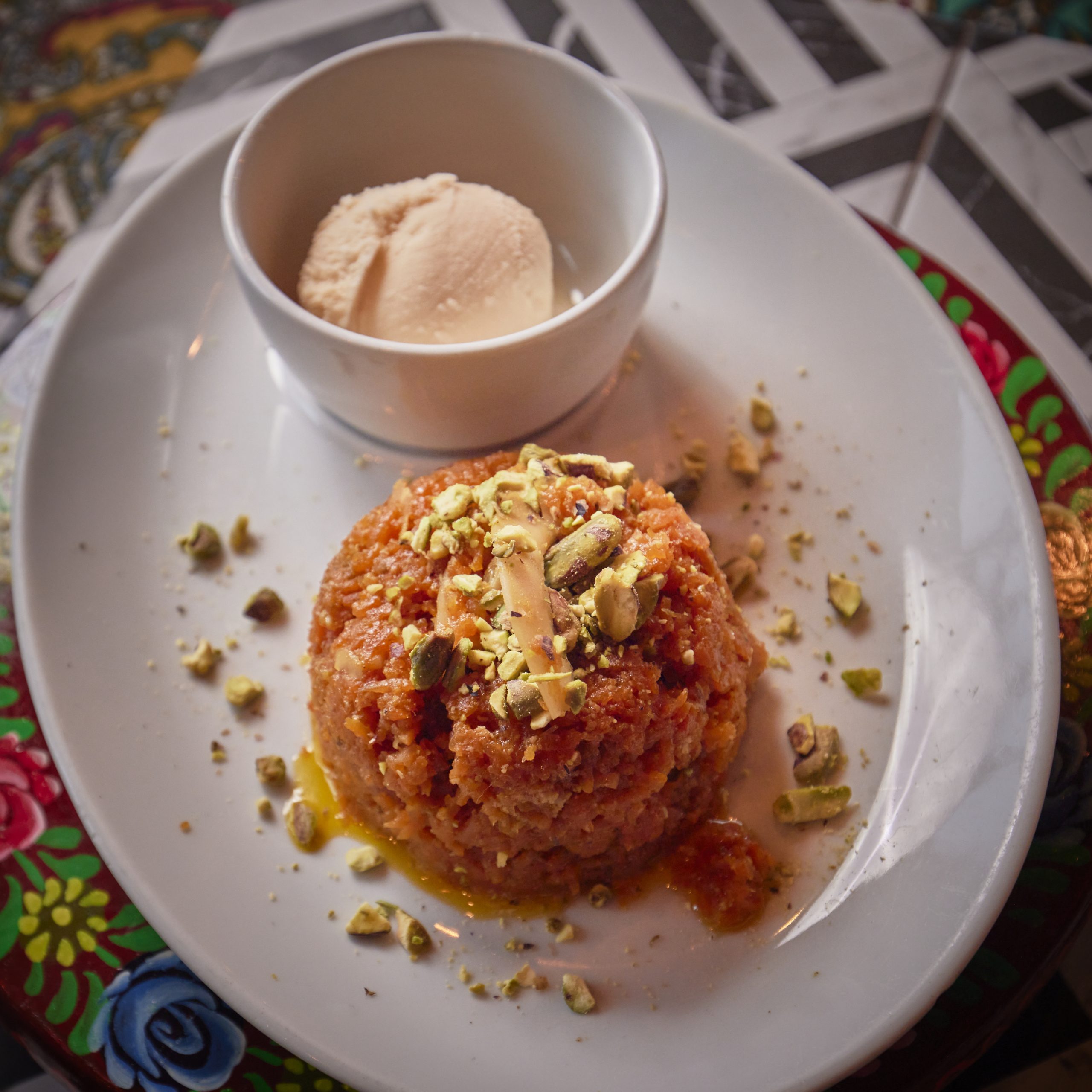
Gajrela is a slow cooked carrot dessert, made with cardamom and pistachio and served warm. It is the kind of dish that cannot be hurried and does not pretend otherwise. At MyLahore, it is served with kulfi ice cream, and the contrast of the warm gajrela against the cold kulfi is worth the wait entirely. A vegetarian dessert that consistently draws people back.
For a full rundown of the desserts available at MyLahore after iftar, our post on 6 desserts that hit different after iftar at MyLahore covers everything from these traditional options through to the chocolate-led choices.
Suhoor: The Meal Before the Fast
Suhoor, the pre-dawn meal eaten before Fajr prayer, is a different kind of eating to iftar. The priority is food that sustains, that releases energy slowly, and that does not leave the body struggling by mid-afternoon.
Pakistani Suhoor staples tend towards bread and egg dishes, lentils, yoghurt, and rice. The logic is practical: complex carbohydrates and protein over anything quick-burning or overly sweet. At MyLahore, dishes like the Daal Tarka (split yellow lentils cooked with ginger, garlic and onions), Aloo Paratha (soft, flaky pan fried bread filled with potato), and the egg-based sides serve this purpose well.
The Doodh Patti Chai, Yorkshire tea brewed with milk and cardamom, is a natural companion to Suhoor. Warm, gently caffeinated, and familiar enough to make a 3am alarm feel slightly less unreasonable.
Visit MyLahore This Ramadan
All MyLahore restaurants are open throughout Ramadan for dine-in and collection. Here is where to find us:
Delivery is available through our Bradford delivery location. Our FAQs cover the practical details, and the team is reachable directly through our contact section.
If you are in Birmingham and planning an evening after Taraweeh, our post on where to eat after Taraweeh prayers in Birmingham is the one to read. For Bradford and Leeds, our posts on iftar at MyLahore Bradford and where to break your fast in Leeds go into the local detail. More about who we are is on our story.
Follow us on Instagram, Facebook and TikTok throughout Ramadan. We hope to welcome you this year.